
HOME >
Research News > What Can a Rat’s Ultrasonic Call Tell Us About Food-Related Pleasure?
What Can a Rat’s Ultrasonic Call Tell Us About Food-Related Pleasure?
September 8, 2026
What Can a Rat’s Ultrasonic Call Tell Us About Food-Related Pleasure?
A newly identified vocal signal may indicate that rats vocally express their enjoyment of eating
We have preferences for some foods over others, and this behavior is also seen in animals. Now, researchers at the University of Fukui have found that rats produce distinct ultrasonic vocalizations while consuming highly palatable food. Using machine learning, they identified a specific 40 kHz inverted-U vocalization that occurred more frequently during chocolate consumption than regular chow feeding. The findings could provide a measurable way to study food-related reward and positive emotional states.
Understanding how the brain processes rewarding experiences could help researchers better understand behaviors such as overeating, as well as conditions such as anhedonia—the inability to experience pleasure, which is a common symptom of depression. One way researchers study reward-related processes is through animal models. In rats, ultrasonic vocalizations (USVs), sounds that are too high-pitched for humans to hear, are associated with various emotional and motivational states, including responses to rewarding stimuli. Previous studies found that rats produce these vocalizations when they consume sweetened foods and even when they anticipate receiving them.
Now, researchers, including Assistant Professor Koshi Murata, Dr. Yuki Ikedo, and Dr. Yugo Fukazawa, at the Division of Brain Structure and Function, Faculty of Medical Sciences, University of Fukui, Japan, have identified a distinct subtype of USV—the 40 kHz inverted-U USV—that rats produced more frequently while consuming highly palatable chocolate. The researchers suggest that these vocalizations could provide a measurable signal associated with palatable food consumption and help investigate the brain mechanisms underlying food-related reward and positive emotional states, with potential relevance to conditions such as overeating and obesity.
This paper was made available online on July 17, 2026, and was published in Volume 13, Issue 8 of the journal eNeuro on August 01, 2026.
“When rats eat something delicious such as chocolate, they emit a distinct ultrasonic call that humans cannot hear. This call drops sharply when the brain’s opioid ‘pleasure’ system is blocked. This suggests that rats may be vocally expressing the enjoyment of eating, offering a new window into whether animals experience pleasure as we do,” says Dr. Murata.
In their experiments, the researchers first recorded USVs from rats to identify patterns associated with chocolate consumption. They compared the sounds produced when the rats had access to chocolate with those recorded during baseline periods, and with those from a control group of rats that were not fed chocolate. Using machine learning to analyze the acoustic features of these vocalizations, they identified a distinct 40 kHz inverted-U USV that was strongly associated with chocolate consumption.
The researchers also found that administering naloxone, which blocks opioid receptors, reduced these vocalizations during chocolate consumption. This suggests that the endogenous opioid system, which is involved in processing reward-related and hedonic processes, may influence the production of these vocalizations. The researchers then investigated whether these vocalizations were related specifically to the palatability of the food or were simply a general response to eating. To find out, they compared the vocalizations rats produced while eating chocolate and regular chow. Although the rats consumed similar amounts of both foods, they produced significantly more 40 kHz inverted-U USVs while eating chocolate. The rats also showed a clear preference for chocolate in a separate food-choice test, with 15 of the 16 rats choosing chocolate over regular chow.
The researchers also found that 97.2% of 40 kHz inverted-U USVs occurred within 1 second of a feeding event in the initial experiments. This close temporal association was reproduced in an independent test group, in which 96.6% of these calls occurred within 1 second of feeding.
Together, these results suggest that 40 kHz inverted-U USVs do not simply reflect the act of eating. Instead, the rats produced these vocalizations more frequently when consuming the more palatable food. This suggests that the calls may reflect the rats’ internal state while eating highly palatable food. This finding could open up new ways to investigate positive emotional states in animals and further study the brain mechanisms involved in reward and pleasure.
“Our discovery suggests that animal vocalizations could serve as a real-time, non-invasive readout of internal emotional states—specifically, how much an animal is enjoying its food. Such a tool would allow researchers to measure ‘pleasure’ more directly than current methods permit, and could accelerate research into the brain mechanisms that generate positive emotions,” says Dr. Murata.
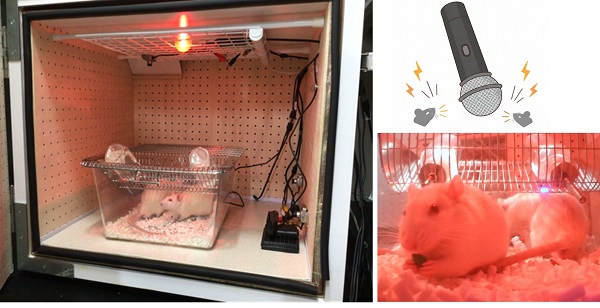
Tracking rats’ vocal responses to palatable food
The researchers wanted a more direct, non-invasive way to assess how much an animal enjoys food, beyond simply measuring food intake. While recording rats during chocolate feeding, they noticed that the rats produced a characteristic vocalization while eating. This led them to investigate whether these calls carried information about how much they enjoyed the food.
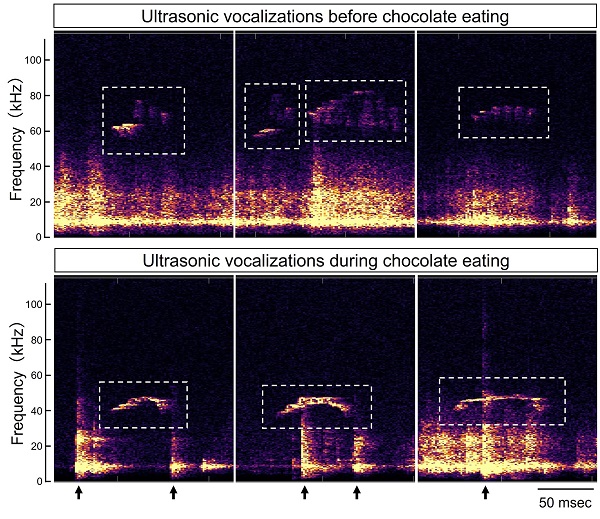
Distinct vocalization patterns emerge during chocolate consumption
Researchers compared the ultrasonic calls rats produced before and after receiving chocolate. Analysis of their acoustic features revealed distinct differences in the calls produced during chocolate feeding, helping researchers identify vocalizations associated with palatable food.
Reference
Title of original paper:A Subtype of Ultrasonic Vocalizations during Palatable Food Consumption in Rats Identified by Machine Learning-Assisted Classification
Journal:eNeuro
DOI:10.1523/ENEURO.0356-25.2026
About The University of Fukui, Japan
The University of Fukui is a preeminent research institution with robust undergraduate and graduate schools focusing on education, medical and science, engineering, and global and community studies. The university conducts cutting-edge research and strives to nurture human resources capable of contributing to society on the local, national, and global level.
Website: https://www.u-fukui.ac.jp/eng/
About Assistant Professor Koshi Murata from University of Fukui, Japan
Dr. Koshi Murata is an Assistant Professor in the Division of Brain Structure and Function, Faculty of Medical Sciences, University of Fukui. His research explores the neural mechanisms underlying reward, motivation, and sensory processing, particularly in relation to food consumption and motivated behaviors. He uses machine learning-assisted analysis of ultrasonic vocalizations, deep learning, and molecular genetics in rodent models. His work examines the roles of dopamine and opioid systems in shaping behavior.
Funding information
This work was supported by Lotte Research Foundation, Urakami Foundation for Food and Food Culture Promotion, Takeda Science Foundation (TSF), and Japan Society for the Promotion of Science (17KK0190, 20H05955, 21H05817, 21K06440, and 24K02131).
Media contact:
University of Fukui PR center
sskoho-k※ad.u-fukui.ac.jp
Please change ※to@.